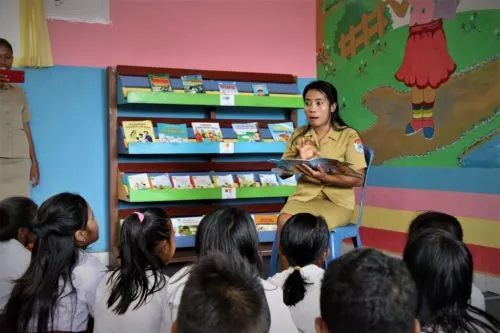
9 Contoh Laporan Hasil Kegiatan Lengkap dan Terbaru
Setiap laporan kegiatan memiliki format berbeda. Jika kamu mengikuti kegiatan kedinasan, laporan yang disusun akan berbeda dengan laporan untuk kegiatan lomba.


 Ikuti Mamikos Info di Google
Purpose
1. Knowing coastal forest formations
2. Knowing the structure of coastal ecosystems
3. knowing the population distribution of flora and fauna of the coast.
Benefit
Students will understand the biology concept. Learning will be easier because the evidence obtained through observations. Besides, students will know coastal forest formations, the structure of coastal ecosystems, the population distribution of flora and fauna of the coast.
Introduction
Coastal ecosystems are composed of terrestrial ecosystems that occupy the area above the shoreline and aquatic ecosystems that occupy the coastline below.
1. Terrestrial Ecosystems
Coastal areas generally forming forest formations, which is based on vegetation type that dominates the community could be classified into several types:
a. Formation Baringtonia
b. Formation Pescaprae
c. Formation Spnifex
d. Mangrove formations
2. Aquatic ecosystem
Marine aquatic ecosystem structure much influenced by environmental factors.
a. Based on the depth of the sea bottom:
1.) Litoral zone : the area between the lines and lines ebb tide sea water. Usually on a sloping beach.
2.) Batial zone : the ocean waters that have a depth between 200m-1800m.
3.) Abisal zone : the ocean waters that have a depth of more than 1800m
4.) Hadal zone : ocean trench with a depth of 6000-10000m
b. Based on the intensity of the light conditions on seawater layer:
1.) Photik zone : the light is still possible for the duration of photosynthesis.
2.) Disphotik zone: the light is too dim to support the process of photosynthesis.
3.) Aphotik zone: the dark zone. Generally the depth > 1000m.
c. Based on the distance from the shoreline:
1.) Neritik Zone :located in the tidal area up to 200m depth the sun still penetrate this area.
2.) Zone Oceanic / pelagic
Marine aquatic ecosystem community is made up of producers including the form of algae and phytoplankton and zooplankton consumers in the form and aquatic animals. Distinguished by his behavior that is:
1. Zooplanktoon
2. Nekton
3. Periphyton
4. Benthos
Klik dan dapatkan info kost di dekat kampus idamanmu:
Kost Dekat UGM Jogja
Kost Dekat UNPAD Jatinangor
Kost Dekat UNDIP Semarang
Kost Dekat UI Depok
Kost Dekat UB Malang
Kost Dekat Unnes Semarang
Kost Dekat UMY Jogja
Kost Dekat UNY Jogja
Kost Dekat UNS Solo
Kost Dekat ITB Bandung
Kost Dekat UMS Solo
Kost Dekat ITS Surabaya